Joy is one of those things that everyone says they want but no one seems to have.
Joy is not possessed by many because they are not aware of where to find it. One critical piece of understanding in your search for joy is the relationship between joy and knowledge.
Joy can’t exist in ignorance
The amount of joy you experience is limited to the amount of knowledge you have.
In Eden, there were two trees: the tree of life, which granted eternal life to all who ate it as long as they ate it, and the tree of knowledge, which dispensed a greater understanding of reality to those who ate it as often as they ate it. Adam and Eve did not have joy until after they gained knowledge by eating of the tree of knowledge.
Adam and Eve lived in a paradise before the fall, but they didn’t comprehend their situation. They had to acquire experience to comprehend what they had in Eden:
And now, behold, if Adam had not transgressed he would not have fallen...they would have remained in a state of innocence, having no joy, for they knew no misery; doing no good, for they knew no sin. (2 Nephi 2:22-23)
Without experiencing negatives, we can’t even notice—let alone enjoy—the equal and opposite positives.
Joy requires knowledge. Without knowledge, you can never notice— let alone enjoy—the good things you have. Without knowledge, you likewise can’t comprehend the negative experiences. Without comprehending negative experiences, you can’t overcome them.
The first step in increasing joy is to obtain more knowledge. Getting more knowledge means gaining a greater understanding of reality, and is discussed extensively in the author’s book, The Glory of God is Intelligence.
A vast array of circumstances can generate more knowledge. For example: generating new questions, discovering limits of existing ideas, finding new problems, etc.
Knowledge generates suffering
Joy is not the same as minimizing pain. It is much richer than that. As will be discussed in much more detail in other parts of this book, suffering is absolutely required on the way to obtaining more joy.
One aspect of seeking joy that generates suffering is the acquisition of more knowledge. When you obtain more knowledge, that knowledge will always include a greater comprehension of the things in this world that cause suffering. This is what Solomon meant when he wrote: “For in much wisdom is much grief: and he that increaseth knowledge increaseth sorrow.” (Ecclesiastes 1:18)
Knowledge tends to generate sorrow because every new piece of information causes one of several responses within you. In the least likely case, it will give you confidence by reaffirming what you already thought you knew. It is more likely that it will suggest that some aspect of you or your life is not as you thought it was. This can take the form, for example, of showing you that something or someone has less value than you thought, and should be removed from your life. It can also show you that something or someone has more value than you thought and should be added to your life. Both of these revelations cause sorrow because, in the first case, you will tend to interpret the experience as loss, and in the second case you will be challenged to change. Trust in God, in both cases, is the key to choosing to interpret both of these experiences as positive. In reality, both are steps along the path to greater joy.
Another example of the suffering caused by knowledge is how you feel when you better understand the goodness and beauty available in something you have not yet obtained.
At times, you may question whether the positive aspects of life are worth its negative aspects. Remember that God has promised that they are, and he has explained that there are many positive aspects that he has not yet revealed to you:
But as it is written, Eye hath not seen, nor ear heard, neither have entered into the heart of man, the things which God hath prepared for them that love him. (1 Corinthians 2:9)
This should cause you to ponder what reasons he might have for withholding knowledge of these things from you. Even if the timing is not right for you to receive them, couldn’t he at least tell you about them so you know what is coming later?
It turns out that God can only reveal to you the good things currently outside of your comprehension as far as you trust him, because inasmuch as your trust in him is limited, his revealing them to you would cause sorrow beyond what you can bear, because you would understand what is available as well as how much better it would be for you to experience it, and it would cause you pain to not have it yet.
In all cases, sorrow that comes through knowledge is a positive thing, because it is a necessary precondition to obtaining what is required to have greater joy.
Knowledge creates an opportunity to reconcile
Every time you learn something new, you expand or improve your conscience. You see how some things improve in ways you didn’t previously realize, and you see how some things cause harm in ways you didn’t previously realize. Your understanding of right and wrong is changed. With these changes, you receive opportunities to reconcile your actions, thoughts, and desires to your improved conscience.
Your conscience is your compass that guides you to the best life:
Your eye is the lamp of your body; when your eye (your conscience) is sound and fulfilling its office, your whole body is full of light; but when it is not sound and is not fulfilling its office, your body is full of darkness. (Luke 11:34, AMP)
Your conscience is what lays out the path to greater joy. Obeying your conscience is the key to perfect peace. “All the days of the afflicted are evil; but a good conscience is a continual feast.” (Proverbs 15:15, 1599 Geneva Bible)
When you are completely reconciled to your conscience, you enjoy all the positive consequences of the principles you live. You are enabled to have joy equal and opposite to the depths of suffering you have encountered because, having learned the principles that overcome that suffering, you can now comprehend, value, and appreciate all the benefits of having done so.
Everyone’s conscience tells them right from wrong at their degree of understanding, no matter if they are religious or not:
He will punish sin wherever it is found. He will punish the heathen when they sin, even though they never had God’s written laws, for down in their hearts they know right from wrong. God’s laws are written within them; their own conscience accuses them, or sometimes excuses them. And God will punish the Jews for sinning because they have his written laws but don’t obey them. They know what is right but don’t do it. After all, salvation is not given to those who know what to do, unless they do it. (Romans 2:12-15, Living Bible)
When you disobey your conscience, you experience guilt. The opposite of this guilt is joy:
Yea, and I know that good and evil have come before all men; he that knoweth not good from evil is blameless; but he that knoweth good and evil, to him it is given according to his desires, whether he desireth good or evil, life or death, joy or remorse of conscience. (Alma 29:5)
All that matters in life is the degree to which you follow your conscience, and the degree to which you expand it by how you seek and react to new information. While this may seem a bold claim, realize that everything good in this life is obtained to the extent that you follow your conscience. It is your individual roadmap to the maximal joy that is available. It will lead you precisely where you need to travel to encounter the greatest joy.
Too much unhappiness and guilt exist in this life because of this simple fact: we have too much concern about what other people think is right, and too little concern about what our own conscience says is right: “...Pay attention to your conscience, and do not be unfaithful.” (Malachi 2:16, New English Translation)
Your path may not obviously intersect with anyone else’s. Conventional wisdom is wonderfully successful in one thing: producing people who are just like everyone else. If you want to be miserable, divorced, and poor, then by all means get and follow conventional wisdom. If you desire something better than what most people have, you must by definition find a path that is better than most people follow.
What other people think is right will never free you from the guilt you will feel about something your conscience incessantly cries is wrong:
The spirit (conscience) of man is the lamp of the Lord, searching and examining all the innermost parts of his being. (Proverbs 20:27, AMP)
What other people think is wrong will never free you from the small voice inside you that incessantly whispers there is something more than what other people think and do: “Now, there was a punishment affixed, and a just law given, which brought remorse of conscience unto man.” (Alma 42:18)
Following your conscience at all times and in all places will give you immense peace that is independent from anything anyone or anything can do to you:
And, beloved, if our consciences (our hearts) do not accuse us [if they do not make us feel guilty and condemn us], we have confidence (complete assurance and boldness) before God... (1 John 3:21, AMP)
Following your conscience without exception will free you from the guilt you feel when you don’t do the best you know how to do and from the guilt you feel when you realize you are different than what others want you to be and do. It will free you from the anxiety you feel when the small voice inside you tells you there is something better out there than what you have, because you will know that you are firmly on the path to obtaining it.
Reconciliation to knowledge generates peace
Once you are reconciled to your conscience—meaning you submit in all things to your present, sincere understanding of what is right and wrong—you will encounter peace of conscience:
And herein do I exercise myself, to have always a conscience void of offence toward God, and toward men. (Acts 24:16)
Because having a clean conscience is such a wonderful situation, one might be tempted to remain in this state forever. Unfortunately, freedom from guilt is not the same as freedom from consequences. Ignorance of how things really work does not protect you from how things really work. Even when you completely align yourself to your conscience, you are still exposed to all the negative consequences of not obeying the knowledge you do not yet have about reality.
Even if you were resolved to remain at the state of understanding to which you are already reconciled, you would find it very difficult to avoid the revelation of things you do not yet know. Life is designed to bombard you with clues that there is more available than what you have. Ignoring these clues—which tend to be anything but subtle in how overwhelming they are—is like a child pretending that covering his eyes makes him invisible.
The Lord said: “Come unto me, all ye that labour and are heavy laden, and I will give you rest.” (Matthew 11:28) Rest in the Lord means a state of uninterrupted peace and joy. Rest in the Lord requires two things:
- You have to conquer the darkness of which you are aware. When you do this, you retain all the joy available at this level of awareness, but lose the sorrow.
- You have to remain unaware of the darkness beyond the limits of what you have overcome.
That darkness is going to come for you, whether you seek it out or not. You may as well go out to contend with it instead of waiting around for it to contend with you.
Therefore, you should constantly seek to keep learning everything you can about life.
Obtaining more knowledge
The Lord’s disciples asked him why he taught in parables. He said:
11 ...Because it is given unto you to know the mysteries of the kingdom of heaven, but to them it is not given.
12 For whosoever hath, to him shall be given, and he shall have more abundance: but whosoever hath not, from him shall be taken away even that he hath.
13 Therefore speak I to them in parables: because they seeing see not; and hearing they hear not, neither do they understand. (Matthew 13)
Jesus was explaining that we are only ready to learn more once we understand and apply what we’ve already been taught.
If you are reconciled to everything you know, you are prepared to learn more:
9 ...It is given unto many to know the mysteries of God; nevertheless they are laid under a strict command that they shall not impart only according to the portion of his word which he doth grant unto the children of men, according to the heed and diligence which they give unto him.
10 And therefore, he that will harden his heart, the same receiveth the lesser portion of the word; and he that will not harden his heart, to him is given the greater portion of the word, until it is given unto him to know the mysteries of God until he know them in full. (Alma 12)
Learning more is not about detached factoids. Learning more means that what you do or why you do it changes.
As you learn more, your conscience will advance. You may see some things as right or wrong that you previously didn’t consider or considered to be neutral. You may come to see more or less benefit than you did in your previous perspective. You may see positive or negative consequences that you didn’t previously see.
od will continue to send us as much hardship as we can bear, with temporary breaks as we need them. As he increases the heat, there will likely come a point in a day, week, month, or matter of years, where we hit a situation where we refuse to listen to his voice (mostly represented in our conscience). We lose some level of light and truth at this point, but if we mount up and take courage, we will eventually be given another opportunity to succeed where we have failed.
Note that God has promised to never send us more than we can handle:
...the Lord giveth no commandments unto the children of men, save he shall prepare a way for them that they may accomplish the thing which he commandeth them. (1 Nephi 3:7)
....And if it so be that the children of men keep the commandments of God he doth nourish them, and strengthen them, and provide means whereby they can accomplish the thing which he has commanded them.... (1 Nephi 17:3)
If we fail, then, it is by our own choice.
Continuous growth
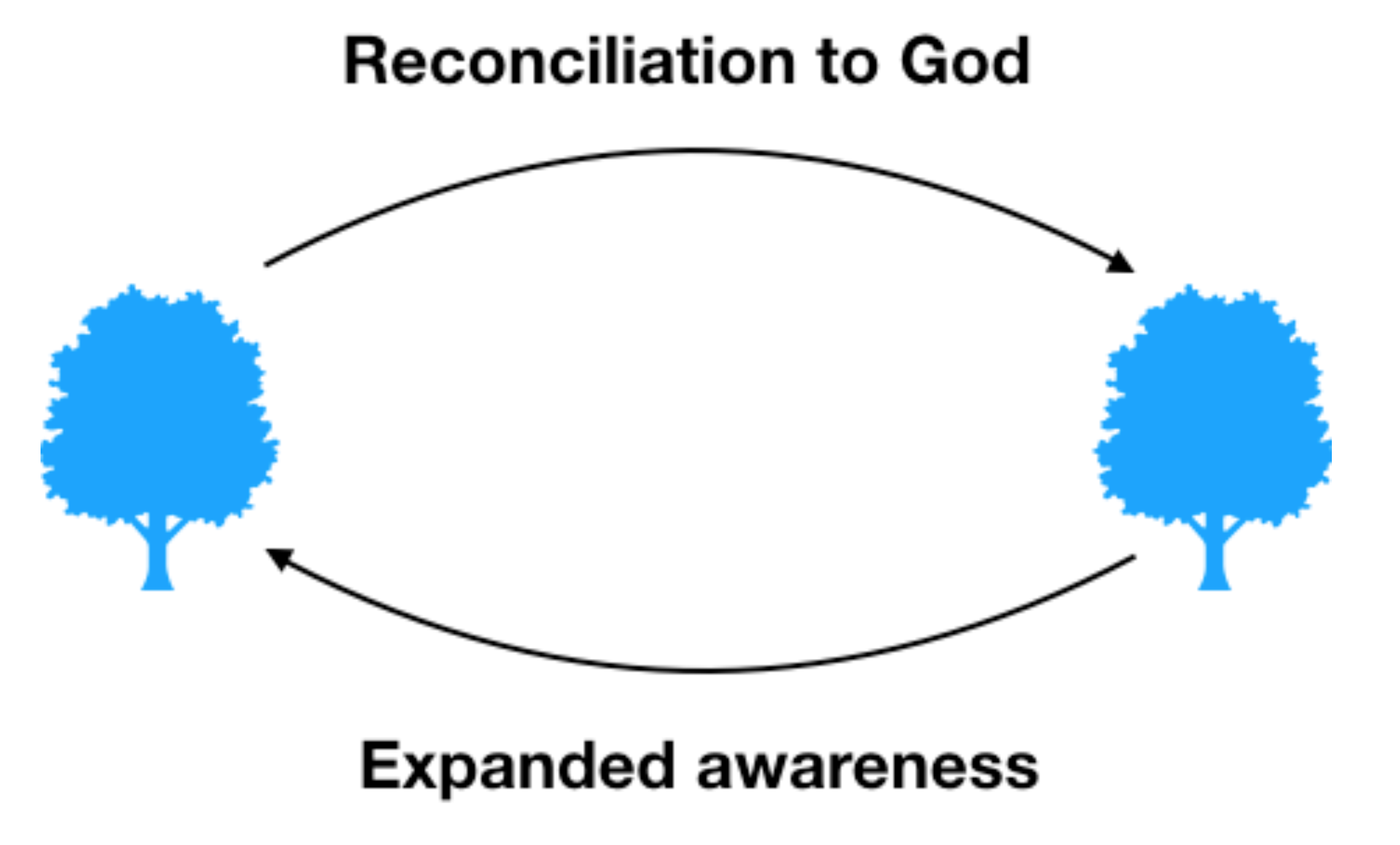
The two trees in Eden give a nice allegory to understand the cyclical relationship between gaining joy, gaining knowledge, and gaining sorrow. Anytime you choose to, you can “eat” from one tree or the other. When you gain more knowledge, you also gain the opportunity to reconcile to it. Should you choose to, you can then either rest in peace (at least until more awareness comes to you unbidden), or you can willingly seek more knowledge.
Though this process tends to be experienced as a cycle, it need not be. If you choose, you can opt out of rest. It is possible to maximize your joy through remaining in a constant state of learning, but doing so is only possible through complete trust in God. Opting out of rest by seeking continuous learning is very difficult because most people will limit their trust in God without constant reassurance that he will indeed deliver good things to them in response to their seeking him. However, the greatest joy in life is available only to those who trust him without limits—even when it isn’t obvious how what he is providing will turn out in their benefit:
3 Trust in the Lord, and do good; so shalt thou dwell in the land, and verily thou shalt be fed.
4 Delight thyself also in the Lord: and he shall give thee the desires of thine heart.
5 Commit thy way unto the Lord; trust also in him; and he shall bring it to pass.
6 And he shall bring forth thy righteousness as the light, and thy judgment as the noonday.
7 Rest in the Lord, and wait patiently for him: fret not thyself because of him who prospereth in his way, because of the man who bringeth wicked devices to pass. (Psalm 37)
Unconditional trust of God includes not needing him to give you breaks or milestones. You must come to this point before you can live what was described by Jesus when he said “seek ye first the kingdom of God...”:
31 Therefore take no thought, saying, What shall we eat? or, What shall we drink? or, Wherewithal shall we be clothed?
32 (For after all these things do the Gentiles seek:) for your heavenly Father knoweth that ye have need of all these things.
33 But seek ye first the kingdom of God, and his righteousness; and all these things shall be added unto you. (Matthew 6)
The ideal way to move through life is to be continually increasing the number of situations we have put under our feet. This process does not have to take much time.